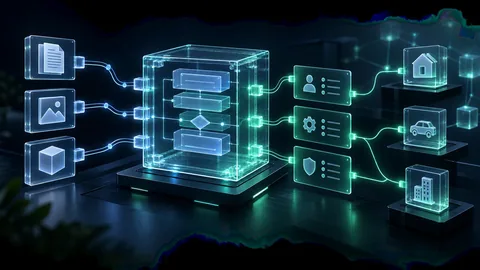
Check data sources, aggregation, update delay, failure controls and change authority. An automated contract still depends on its inputs.

Traceable and diverse

Timestamp and thresholds

Explicit failure rules
Trace the data path
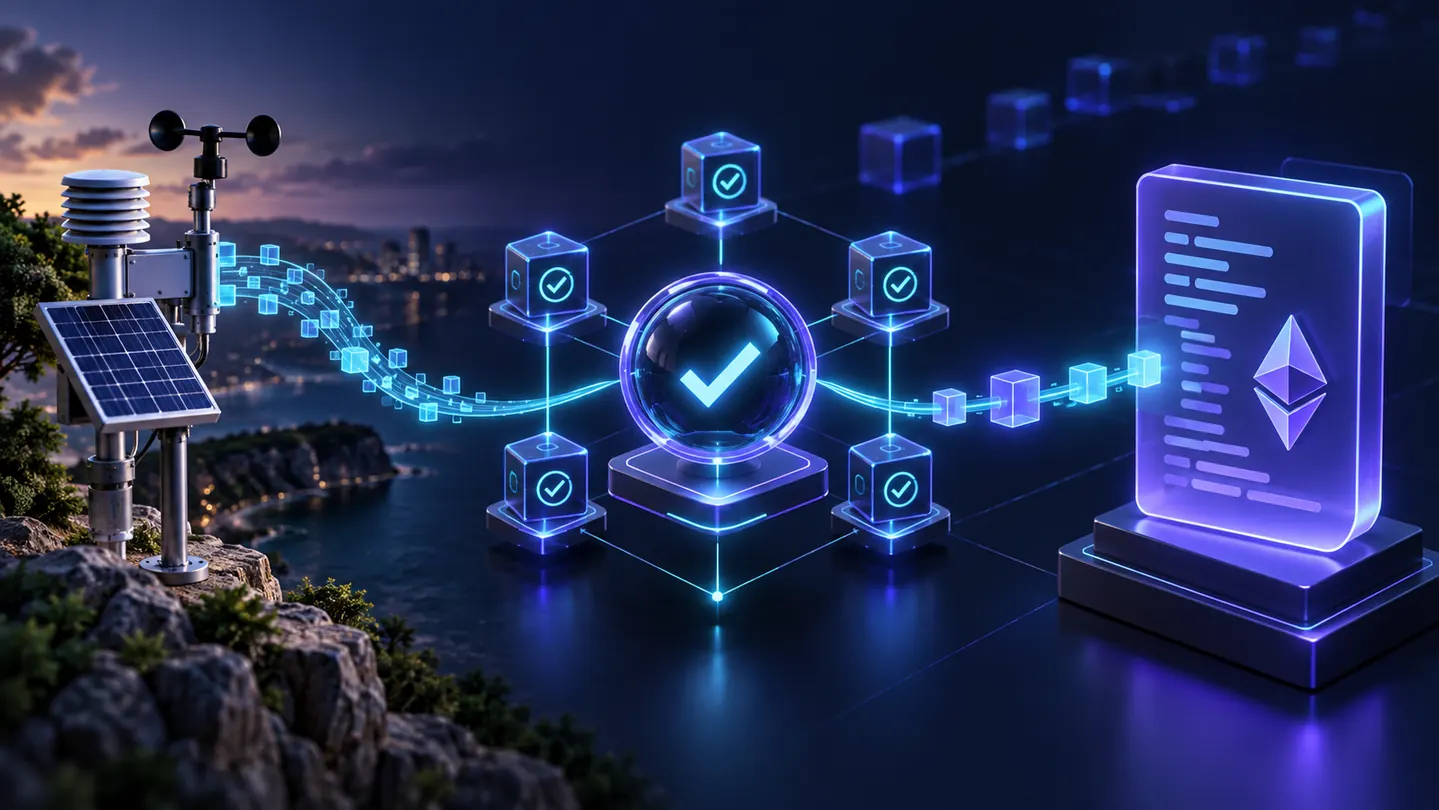
Data originates offchain, is collected and sometimes aggregated, then published to contracts. Each step can add error, delay or manipulation.
Inspect safeguards
Identify independent sources, aggregation rules, update cadence, deviation limits and historical transparency. Multiple nodes using one source are not truly independent.
Plan for anomalies
Look for pause rules, limits, stale-data handling and responses to extreme markets. Accurate but old data can still trigger harmful decisions.
Connect to economic risk
For a lending or exchange contract, simulate bad input: liquidation, mispricing and loss may occur before correction.
Inspect the external data
A loan or derivative contract may perfectly execute a rule based on a wrong price. Study sources, aggregation, update frequency, safeguards and behavior during outages.
- Find out what happens when data becomes stale.
- A decentralized oracle can still depend on thin markets.
Practical case: decision and limits
A price was correct when published but stale by your operation. Check timestamp, update cadence, triggers and behavior when data is unavailable. A Layer 2 sequencer outage may require additional protections. Multiple sources are insufficient when they share the same thin market or infrastructure. Inspect the rule actually used by the contract.
A concrete verification
Record price timestamp and stale-data policy: a plausible value can be too old.
Interpret a value with its unit and timestamp
A feed may expose an integer answer, a decimal count and the timestamp of its last update. Reading an existing answer is not enough to establish that it is recent enough for the intended operation.
- Check the specific feed’s asset, quote currency, network and decimals.
- Acceptable freshness depends on the application; no single threshold fits every feed.
Worked example: correct units, stale data
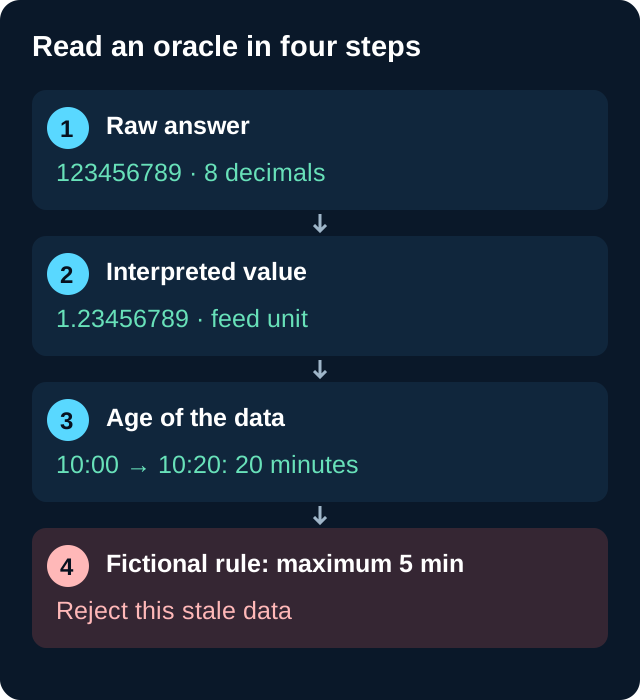
A raw answer of 123456789 with 8 decimals represents 1.23456789 in the feed’s unit. An update at 10:00 read at 10:20 is 20 minutes old.
- Under a fictional maximum-age rule of 5 minutes, this data must be rejected.
- This example describes no actual feed; also define how the application behaves when data is unavailable.
Check what happens when the sequencer comes back
On some layer 2 networks, a published price can remain visible while the sequencer is unable to process transactions normally. For a DeFi loan, check whether the contract reads a sequencer uptime feed, enforces a grace period after recovery and also validates the price timestamp. Record which operations are available during an outage, including repayments, collateral additions and liquidations. An available uptime feed does not establish that the protocol reads it.
Checks to make
| Item | Check |
|---|---|
| Source | Traceable and diverse |
| Freshness | Timestamp and thresholds |
| Fallback | Explicit failure rules |
Frequently asked questions
Does an oracle prove a fact is true?
No. It delivers data under a trust model.
Are multiple nodes enough?
Not if all rely on the same failing source.
Why check a feed’s decimals and pair?
Oracle answers have units, precision and timestamps. Interpret integer values using their decimals. An asset/USD feed differs from asset/ETH; a wrong scale or pair can distort collateral ratios even with a fresh answer.
Verifiable sources
 Ethereum.org: Oracles
- Ethereum.org: Smart contract security
 Chainlink: Data feed API: decimals and updatedAt
- Chainlink: Sequencer status and recovery grace period
Independent educational content reviewed against primary documentation. No personalized recommendation or promise of returns. Updated November 15, 2026
Prepare and continue reading

Useful background
- Smart contracts and tokens: read the rules before signing
A smart contract is a program executed by a blockchain. A token is a record managed by a contract under a standard. Before interacting, verify the contract address, network, called functions, approvals, administrator powers and external dependencies.
- Liquidity and volatility: understand the price you can execute
Liquidity is the ability to buy or sell without moving the price sharply. Review spread, depth at several distances, credible volume, fragmentation, order size and withdrawal conditions. Historical volatility does not cap the next move.

Continue to the next step
- DeFi borrowing: collateral, debt and liquidation
Crypto-backed debt can be liquidated when collateral no longer meets market rules. Monitor debt, accrued interest and prices together.
- Understand stablecoins and their risks
A stablecoin aims to track a reference through reserves, overcollateralization, arbitrage or an algorithm. It remains exposed to issuer, reserve, liquidity, redemption, smart-contract, network and regulatory risk.