
Overall operation cost
Enter amount, network fees, service fees and spread in the same currency to compare total cost, net amount and fee percentage.
Use the tool

Choose the tool that fits your question. Calculations use your assumptions in the browser, without live quotes or wallet connections. Each tool stays alongside its guide, formulas and limits.
Enter amount, network fees, service fees and spread in the same currency to compare total cost, net amount and fee percentage.
Use the tool
Compare used gas, gas limit and maximum price. The authorized cap is not the bill; read the formula and L2 exclusions.
Use the tool
Use a quoted quantity and tolerance to calculate a theoretical minimum. This is neither an executable quote nor protection against every risk.
Use the tool
Compare added and deducted fees, then review six operational checks. The tool does not automatically verify networks or addresses.
Use the tool
Vary collateral and debt values with an assumed threshold. This simplified model shows a changing ratio, not a liquidation probability.
Use the tool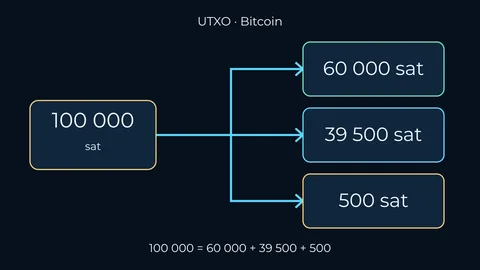
Use input satoshis, payment, virtual size and an assumed rate to distinguish fee and remainder. The calculation selects no UTXOs and validates no transaction.
Use the tool
Explore three fictional levels and compare market and limit orders: cost, average price and unfilled quantity.
Use the tool
A website connection, a spending permission and a signature are different mechanisms. These examples concern a conventional ERC-20 token; some contracts use different rules.
Use the tool
An ERC-20 balance is an integer. The decimals field tells you how to display it in tokens. Compare both representations before interpreting an amount or an allowance.
Use the tool
Compare current circulating supply, future supply and a reference supply. All numbers are hypothetical; the future price assumes constant market capitalisation.
Use the toolA website connection, a spending permission and a signature are different mechanisms. These examples concern a conventional ERC-20 token; some contracts use different rules.

| Action | Actual effect | Useful check |
|---|---|---|
| Disconnect the website | Ends the interface connection; a permission already recorded on-chain may remain active. | Check the token permissions separately. |
| Confirm approve(spender, 0) | Sets this allowance to zero on the relevant ERC-20 contract, if the transaction succeeds. | Check the network, token, spender and new state after confirmation. |
| Sign an ERC-2612 permit | Creates signed permission that another party can submit. The signature alone does not yet change allowance. | Inspect spender, value, nonce, deadline and the signing domain. |
| Wait for the permit deadline | Prevents submission of that permit after its deadline; does not remove an allowance already created. | Read allowance again: an expired signature display does not determine its state. |
| Hide the token in the wallet | Changes the displayed token list; changes neither the on-chain balance nor permissions. | Inspect the contract with an explorer for that network. |
| Change the wallet password | Protects local access depending on the software; does not replace the private key or revoke permissions. | Distinguish device security, key compromise and contract permissions. |
An ERC-20 balance is an integer. The decimals field tells you how to display it in tokens. Compare both representations before interpreting an amount or an allowance.
Without JavaScript, use the formulas and example below to move the decimal point manually.
Displayed amount = integer ÷ 10^d; integer = displayed amount × 10^d, where d is the number of decimals. Every digit is preserved. Results are normalized without thousands separators or unnecessary fractional zeroes.
Read decimals from the contract on the intended network: this metadata is optional in ERC-20. A symbol alone does not identify an asset. This tool verifies neither contract, balance, price nor net amount received. Calculation needs no wallet connection or network request.
Total cost = network fee + service fee + amount × spread / 100. The fee rate is this total divided by the amount, multiplied by 100.
The net amount assumes all these costs are deducted from the budget. If costs exceed that budget, a displayed zero does not mean the operation is possible. If fees are charged on top or in another asset, calculate the total debit separately.
Hypothetical example: for 1,000 units, 2.50 in network fees + 5 in service fees + a 0.8% spread produce a cost of 15.50, or 1.55%, and 984.50 net. This model deducts costs from the amount; displayed net is capped at zero when costs exceed it.
