What is a cryptocurrency?
A digital asset whose transfers are recorded and validated by a network. Bitcoin is a native coin; many other assets are tokens created on an existing blockchain.

A clear path to understand blockchain, choose your tools, protect your assets and explore Web3 methodically — with no promise of returns.
The shared ledger that makes transactions verifiable.
A scarce digital asset with no central authority.
A programmable infrastructure for applications.
Tokens designed to track a reference currency.
A cryptocurrency is a digital asset transferred on a blockchain. To get started, first understand key custody, choose a verifiable provider, secure your access and test each new operation with a small amount.
A digital asset whose transfers are recorded and validated by a network. Bitcoin is a native coin; many other assets are tokens created on an existing blockchain.
Through a provider available in your country, after checking its legal identity, fees, withdrawal process and account protections.
On a platform that holds the keys for you, or in a personal wallet where you control the recovery phrase. This choice shifts responsibility; it does not remove risk.
Loss can result from price moves, scams, a wrong address, vulnerable code or a failing provider. A signed transaction is generally irreversible.
It is a young collection of technologies, assets and services. The potential is real, but so are losses, irreversible mistakes and scams. Your best first decision is to learn before you buy.
Never invest money required for daily life.
Always verify the address, network and source.
Start small and test every new operation.
Keep your recovery phrase offline and private.

Follow the steps in order. Each layer reduces one category of risk before you move to the next.
Money, digital scarcity, decentralization and trust.
Blocks, transactions, fees, confirmations and explorers.
Exchange, wallet, network and purchase method.
Backups, authentication, signatures and tests.
Smart contracts, DeFi, NFTs, DAOs and specific risks.
Plan, position size, records and local obligations.
You do not need to learn everything at once. Choose your goal, then return to the roadmap to fill any knowledge gaps.
Blockchain, keys, wallets, networks and fees explained without jargon.
See the foundationsBudget, provider checks, account security, a test purchase and record keeping.
Follow the stepsWarning signs and the checks to make before every signature.
Open the checklistDEXs, lending, staking, NFTs and smart-contract risks.
Explore DeFiYou do not need to code. You do need to understand what happens when you sign a transaction.
A shared database whose history is validated by a network. Public does not mean anonymous: most transactions remain visible.
A coin is native to its blockchain. A token is created by a smart contract on an existing chain. Their rights and risks differ.
A wallet holds keys, not coins. The private key authorizes spending; the public address receives assets.
Proof of Work and Proof of Stake are different ways to agree on ledger state and discourage fraud.
Programs executed on a blockchain. They automate rules, but code or parameter errors may be irreversible.
Every network has its own assets, rules and fees. Using the wrong network may make funds difficult or impossible to recover.
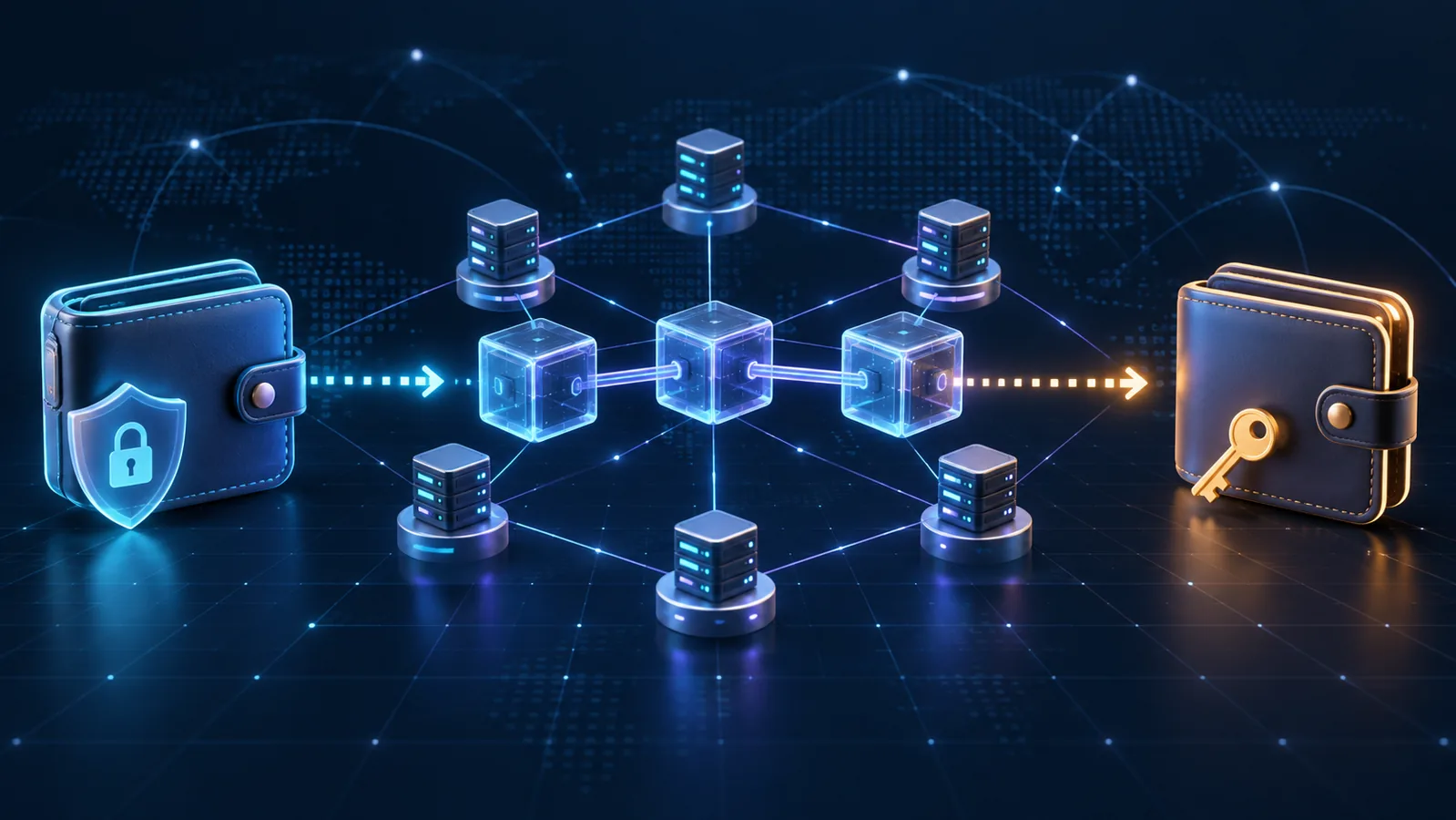
A transaction is signed by the sender’s wallet, broadcast to the network, verified and added to the shared history. The wallet holds the keys; the assets remain recorded on the blockchain.
| Solution | Strength | Main risk | Access |
|---|---|---|---|
| Centralized exchange | Simple buying and selling | Dependence on the provider | Password + 2FA |
| Software wallet | Direct control and Web3 access | Device and phishing exposure | Recovery phrase |
| Hardware wallet | Isolated keys for storage | Cost and backup discipline | Device + offline backup |
The technology can transfer value, automate rules and represent digital rights. Its usefulness always depends on context, costs, remaining intermediaries and the risk accepted.

Direct transfers between addresses and cross-border settlement, depending on the network and service used.
Limits: changing fees, irreversible errors, volatility, availability and local obligations.Some tokens seek to track a currency for settling or moving digital value.
Limits: reserve quality, issuer risk, liquidity, possible freezes and loss of the peg.Trading, lending, escrow or coordination can be executed through public code.
Limits: bugs, governance, oracles, compromised interfaces and misunderstood parameters.A token can act as a certificate, access right, vote or identifier for an asset.
Limits: owning the token does not guarantee legal ownership, value or permanent access.Interfaces, oracles, bridges, teams or administrative key holders may remain essential.
It is generally pseudonymous: addresses and flows are visible and may be linked to an identity.
Its intended stability depends on a mechanism, reserves, liquidity and sometimes an issuer.
An audit examines a defined scope at one point in time; it cannot cover every future error or scenario.
A controlled operation is prepared, tested and documented. Never let urgency decide for you.

Choose an amount whose total loss would not affect essential spending or future plans.
Check the legal entity, fees, withdrawal methods, reputation and your country’s regulatory framework.
Use a unique password, a password manager and app-based 2FA instead of SMS where possible.
A market order favors execution; a limit order sets a maximum price. Review total cost, not just the displayed fee.
Send a small amount first, check the network and compare the first and last characters of the address.
Archive dates, amounts, fees, transaction IDs and source of funds for tracking and tax duties.
The real cost is not limited to the fee displayed. Compare the amount debited, the amount ultimately received and every intermediate layer before confirming.
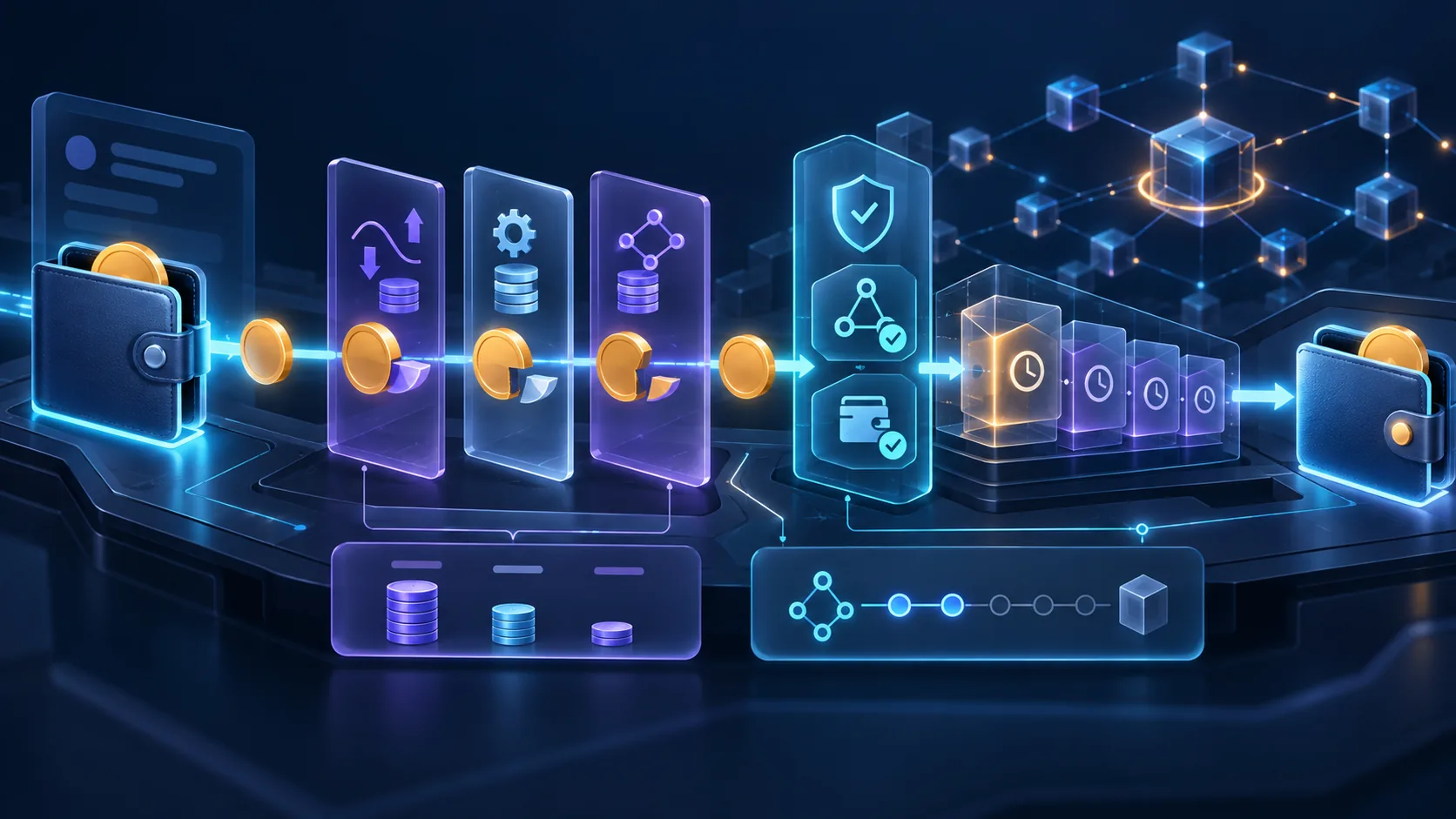
The gap between the market price and the price actually applied when buying or selling.
The commission charged by the platform, payment provider or application used.
The amount paid for a blockchain to process and confirm an operation.
Possible costs for withdrawing, converting a currency or changing networks.
A pending operation is generally waiting for inclusion or enough confirmations. It is not automatically lost.
Record the exact network, address and transaction identifier supplied by the wallet or service.
Use a recognized explorer to distinguish an unknown, pending, failed or confirmed transaction.
Check the required confirmations, network congestion and whether the selected fee was sufficient.
Follow only the wallet or provider procedure. Never pay a stranger to “unlock” the transaction.
In crypto, a signed transaction is usually final. Legitimate support will never ask for your recovery phrase.
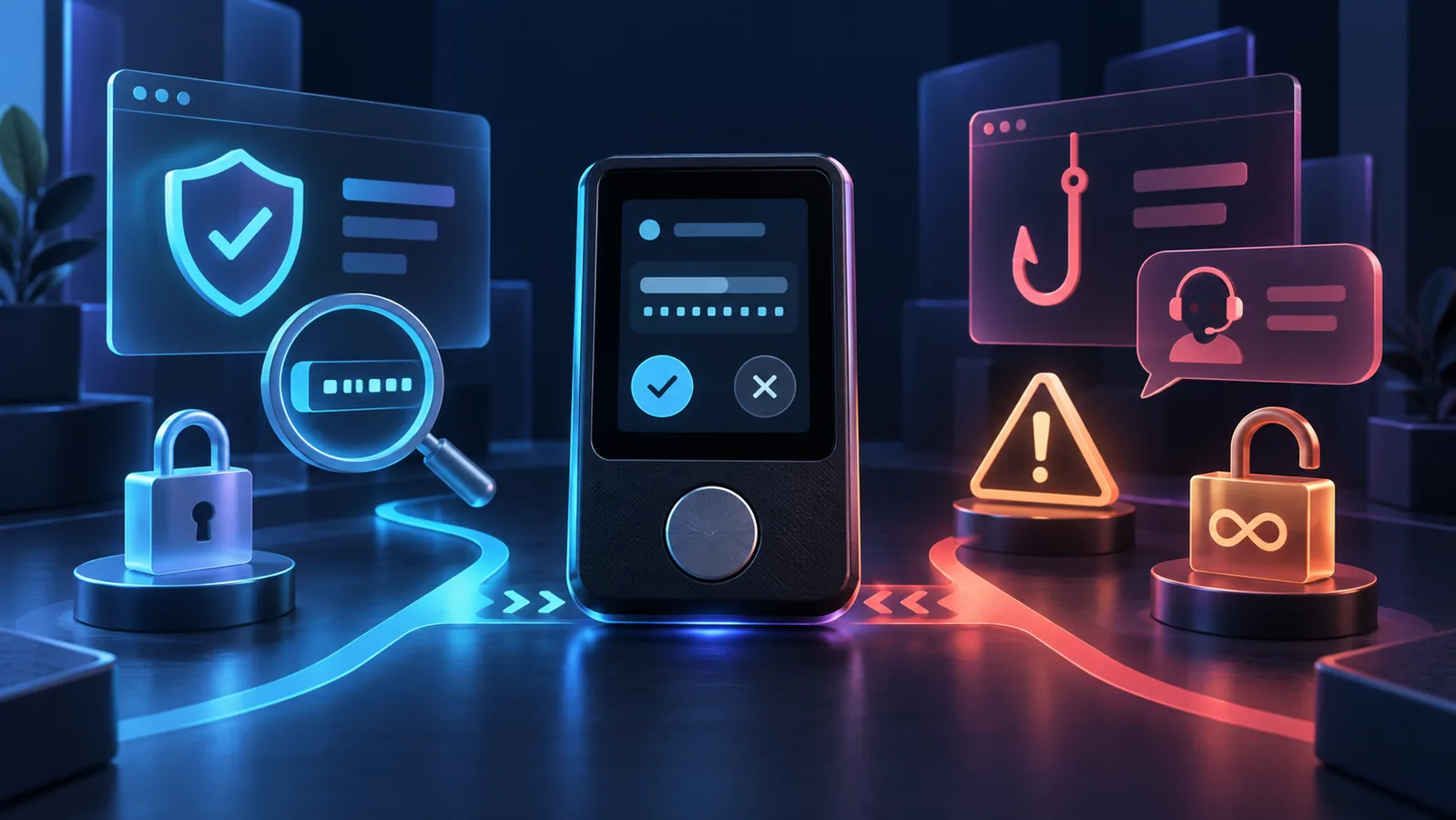
Never pay a supposed recovery expert or share any key. First identify what was actually exposed: a password, recovery phrase, contract approval or an already confirmed transaction.
Close the suspicious site, sign nothing else and follow no instructions received through private messages.
Record the account, wallet, network, permissions and affected transactions without copying your recovery phrase.
Change compromised access from a clean device. If the recovery phrase was exposed, move assets to a newly created wallet. If only an approval is involved, revoke it through a recognized official tool.
Keep URLs, screenshots, timestamps and transaction identifiers. Notify the relevant provider and the competent authority in your country.
Decentralized finance lets people trade, lend, borrow or provide liquidity through smart contracts. It removes some intermediaries but adds technical and economic risks.

Asset swaps through liquidity pools. Risks: slippage, fake tokens and vulnerable contracts.
Collateral is deposited to borrow. Risks: liquidation, changing rates and oracle failure.
Supporting network security for rewards. Risks: lockups, slashing and custody providers.
Digital ownership and collective governance. Value, rights and voting power vary greatly by project.
This framework provides no score or recommendation. Use it to document what you know, what remains uncertain and which risks you accept before making a decision.

Check a criterion only after saving a verifiable source. A completed list does not turn a risky asset into a safe investment.
A written plan reduces emotional decisions. Define why you buy, how much, for how long and under what conditions you will exit.
Assume a sudden fall is possible at any time.
One asset, network or provider creates a single point of failure.
The displayed price does not guarantee you can sell that amount.
An exchange may suspend withdrawals or fail.
Sales, swaps, income and rewards may trigger duties where you live.
DCA, rebalancing and limits do not remove risk, but structure decisions.
A distributed ledger arranged in cryptographically linked blocks.
A centralized or decentralized service for swapping assets.
The cost of executing an operation on a network.
A non-fungible token representing a unique digital identifier.
The secret used to sign and control funds.
Words that can restore a wallet’s keys.
A project abandonment or theft harming its users.
A token seeking to track a reference value with no absolute guarantee.
An asset created on an existing blockchain.
A tool that manages keys and signs transactions.
The responsibility for holding and securing the keys that control assets.
A token’s economic rules: issuance, distribution, utility, incentives and possible burning.
No term matches this search.
Focused learning paths that answer one question, help you verify choices and turn knowledge into safer actions.
 Foundations
A progressive explanation separating the ledger, the network and the assets moving across it.
Read the guide Practical choice
Choose a custody model and backup process first, then an app or device.
Read the guide First steps
A measured path to choose a service, secure the account and verify every step before increasing the amount.
Read the guide Respond calmly
Phishing, suspicious approvals and exposed recovery phrases call for different responses. First identify what was exposed.
Read the guide Practical analysis
Understand whole-output spending, change and fees based on transaction size rather than a percentage of the payment.
Read the guide Practical analysis
A gas-free signature can have financial consequences. Identify login messages, token permissions and executable orders before signing.
Read the guide Verify evidence
A published balance answers a limited question. Separate asset control, customer obligations and the ability to return funds.
Read the guide Execution
A quote is an estimate; the signed limit defines what you actually accept.
Read the guideThis guide introduces essential concepts and risks, without product rankings or price forecasts. The references below let you check the explanations and read further. Rules and services change: consult their current documentation.
 Bitcoin: blockchain and transactionsDocumentation in English
 Ethereum: accounts and walletsDocumentation in EnglishDecentralized finance: uses and risksDocumentation in EnglishEthereum: scam preventionDocumentation in EnglishEthereum: revoke token approvalsDocumentation in English
 FTC: recognize cryptocurrency scamsDocumentation in English
 CISA: phishing, passwords and multifactor authenticationDocumentation in English
Review the checklist before every new operation and proceed one step at a time.