Bitcoin emphasizes native asset transfers with predictable issuance and proof of work. Ethereum also runs smart contracts and applications with proof of stake. Always verify the exact network and asset.

Native transfers and limited scripting

Programmable contracts and applications

Bitcoin native asset
Goals and architecture
Bitcoin centers on its native asset and value transfer. Ethereum is also a programmable platform for tokens and applications. Both depend on open network participants enforcing rules.
Consensus and finality
Bitcoin uses proof of work and confirmations accumulate with blocks. Ethereum uses proof of stake and distinguishes transaction inclusion from network finality. A recipient may require a particular threshold.
Assets and fees
BTC is native to Bitcoin; ETH pays for execution on Ethereum. Tokens issued on Ethereum are not ETH. Representations on other networks add an issuer or bridge dependency.
Choose a route
Start with the use: native transfer, application, payment or custody. Check the recipient’s supported network, total cost, custody, technical risks and relevant rules before a small test.
Choose for the actual need
Bitcoin and Ethereum differ in monetary rules and native capabilities. Compare your use case, security model, fees and custody needs instead of price alone.
- A token on Ethereum is not native ETH.
- Wrapped bitcoin adds an issuer or mechanism to assess.
Practical case: decision and limits
Address compatibility does not make network assets interchangeable. Native BTC, native ETH and representative tokens have different mechanisms. For BTC represented on Ethereum, inspect the custodian or bridge holding the underlying asset and redemption terms. A matching symbol or price does not remove extra risk. Compare intended function before price, speed or fees.
A concrete verification
Identify the layer in fee or confirmation comparisons: L1 and L2 have different guarantees.
Points to compare
| Topic | Description |
|---|---|
| Bitcoin | Native transfers and limited scripting |
| Ethereum | Programmable contracts and applications |
| BTC | Bitcoin native asset |
| ETH | Ethereum native asset |
Frequently asked questions
Can I send native BTC to an Ethereum address?
No. Representations exist but introduce extra dependencies and risks.
Do either networks guarantee returns?
No. Network operation guarantees neither price nor yield.
Verifiable sources
 Bitcoin.org: How Bitcoin works
 Ethereum.org: Ethereum vs Bitcoin
- Ethereum.org: Proof of stake
- Ethereum.org: Validator rewards and penalties
Independent educational content reviewed against primary documentation. No personalized recommendation or promise of returns. Updated October 6, 2026
Prepare and continue reading

Useful background
- Understand blockchain simply
A blockchain is a shared ledger whose history is stored and checked by multiple computers. Transactions are signed, broadcast, verified and grouped into blocks under common rules. It does not make every user anonymous or every application safe.
- Consensus, mining and staking: understand who validates what
Consensus is the set of rules that lets independent nodes choose a common history. Proof of Work commits computation and energy; Proof of Stake commits assets and applies penalties. Neither mechanism removes centralization, outage or governance risks.

Continue to the next step
- Bitcoin: UTXOs, change and transaction fees
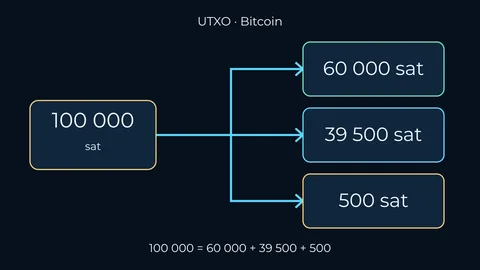
A Bitcoin balance sums unspent transaction outputs, or UTXOs. Spending consumes whole outputs and creates new ones for the recipient and often your change. Fees are the difference between input and output amounts.
- Understand crypto fees and the amount actually received
Total cost can combine a price spread, service commission, payment, withdrawal and network fees. Always compare the amount debited with the net amount received in the same asset or currency at approximately the same time.