A pending transaction is not necessarily lost. Check network, hash and status before replacement; this mechanism cannot cancel a confirmed transaction.

Wallet and explorer

Account ordering

A transaction race
Establish observable status
Start with transaction hash and correct network. Pre-broadcast failure, node rejection, mempool entry and confirmation are different states. An explorer may not have seen a broadcast; absence alone does not prove nothing was sent. Compare wallet status and public data without sharing recovery secrets.
Understand Ethereum nonces
Ordinary Ethereum account transactions execute in nonce order. Later transactions may wait for the previous nonce. Replacement proposes another transaction with the same nonce and fee conditions acceptable to relevant nodes. Requirements vary by client and network; randomly increasing a field does not guarantee acceptance.
Interpret cancellation
A wallet cancellation often submits another transaction with the same nonce, sometimes to yourself. The original can be included first. You may pay fees even though the commercial goal was not met. Once confirmed, replacement does not erase history: assess the result and any separate follow-up action.
Replace a Bitcoin transaction
Bitcoin replacement submits a competing transaction spending shared inputs. Bitcoin Core 29.0 made full-RBF standard, so its relay policy can consider replacement even when the original did not opt in. The wallet still needs to sign the replacement, and nodes still apply their fee and acceptance rules. Verify controlled outputs and the intended recipients in the replacement. Never give wallet keys to an unknown acceleration service.
Calculate parent-child fees
Hypothetical parent: 200 vB and 200 satoshis. Child: 100 vB and 1,300 satoshis. Together they pay 1,500 for 300 vB, or 5 sat/vB. The child must spend a controlled parent output. This is an average rate, not an inclusion guarantee: package policy, competition and miner choices still matter. It cannot accelerate arbitrary incoming payments.
Prevent duplicate actions
Record original and replacement hashes, amounts, fees and final status. Do not create another independent purchase or transfer until you understand the first. Temporary balance changes may include pending activity. Ask a merchant which payment was recognised; for token approvals, also check actual execution.
A concrete verification
Find the old transaction before retrying: another nonce can add an action instead of replacing the first.
Hypothetical case: raise a parent-child package fee rate
A hypothetical Bitcoin parent of 200 vB pays 200 satoshis. An estimated 100 vB child targets 5 sat/vB for the combined package. The package would need 1,500 satoshis, so the child supplies 1,300 in this model. This establishes neither control of the output nor node and miner acceptance of the package. Replacement and CPFP are different operations.
- Check that your wallet controls a usable output with enough value after fees.
- Use wallet estimates and current procedures, not a generic transaction size.
- Keep parent, child or replacement identifiers to distinguish fee acceleration from a second payment.
A queue ordered by account
For an Ethereum externally owned account, transactions use successive nonces. A later transaction may wait because an earlier nonce is missing. A replacement uses the same nonce and competes with the original; it does not erase copies already broadcast.
- Check the network, sender account and nonce before acting.
- Replacement acceptance rules also depend on the node software.
Worked example: a missing nonce
Nonces through 40 have executed; 42 and 43 are waiting, while 41 has not been included. Increasing the fee on 43 does not fix the gap at 41.
- Inspect the transaction using nonce 41 and establish its actual status first.
- Once 41 is confirmed, a replacement cannot undo its execution.
Scenarios and model limits
| Situation | Interpretation |
|---|---|
| Ethereum: earlier nonce pending | May hold up later account transactions. |
| Hypothetical CPFP: 1,500 sat / 300 vB | Package rate 5 sat/vB, without guaranteed inclusion. |
| Confirmed transaction | Replacement does not remove confirmation. |
Frequently asked questions
Can I replace a confirmed transaction?
Replacement targets pending operations. It does not remove an already confirmed transaction.
Why is the next transaction waiting?
An unexecuted earlier Ethereum nonce can hold up later ordinary account transactions.
Do higher fees guarantee confirmation?
No. They may improve competitiveness under applicable rules without promising a block or deadline.
Verifiable sources
 Ethereum: Transactions and nonce
- Bitcoin Core: Fee replacement RPC
 Bitcoin Developer Guide: Transactions
- BIP 125: Replacement policy reference; current client policy must be checked
- Bitcoin Core 29.0: Full replace-by-fee by default
Independent educational content reviewed against primary documentation. No personalized recommendation or promise of returns. Updated November 15, 2026
Prepare and continue reading

Useful background
- Understand crypto fees and the amount actually received
Total cost can combine a price spread, service commission, payment, withdrawal and network fees. Always compare the amount debited with the net amount received in the same asset or currency at approximately the same time.
- How to read a transaction in a block explorer
Copy the transaction hash from your wallet, open a trusted explorer for the correct network, then compare status, addresses, asset, amount, fees and confirmations. Never enter a recovery phrase.

Continue to the next step
- Bitcoin: UTXOs, change and transaction fees
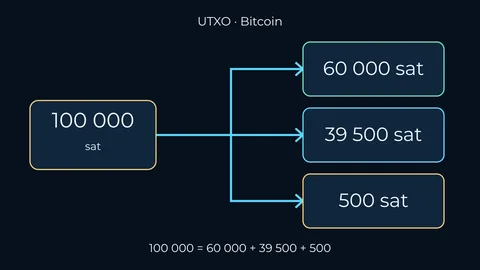
A Bitcoin balance sums unspent transaction outputs, or UTXOs. Spending consumes whole outputs and creates new ones for the recipient and often your change. Fees are the difference between input and output amounts.
- Confirmations and finality: when is a transfer settled?
Look up the hash on the correct network. Check inclusion, confirmations and any explicit finality status. Wait for the receiving service’s stated threshold before treating payment as received.