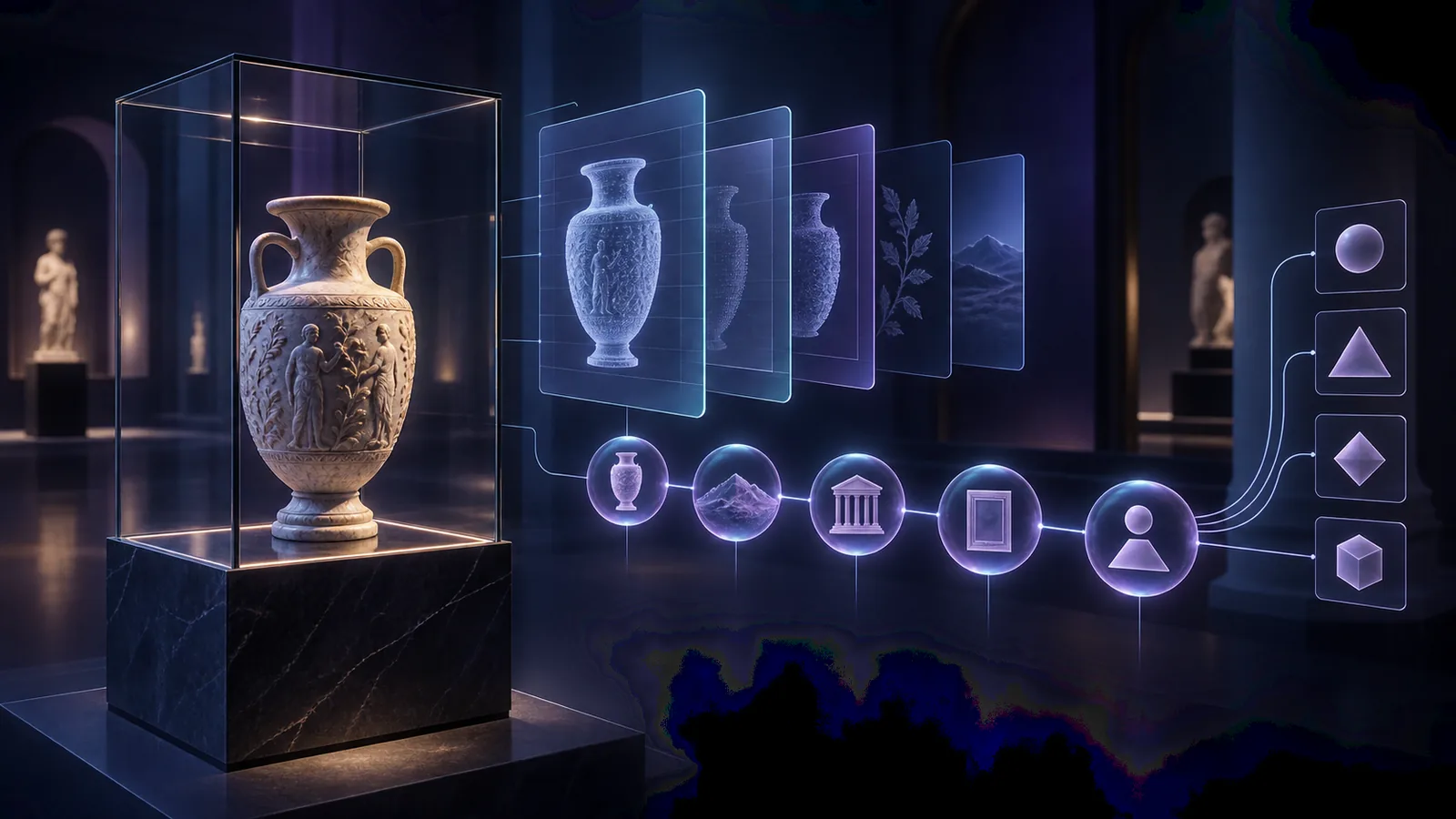
An NFT is an identifiable token managed by a smart contract. It can point to metadata or represent a right defined elsewhere, but possession does not automatically transfer copyright, the physical object or a permanent access right.
Token, media and right are separate.
On-chain data or external reference.
Provenance should begin with a verifiable source.
What the token contains
The ledger records at least an identifier, contract and technical owner. The image, document or attributes may be stored on-chain or referenced through a URL or separate storage network.
Read metadata and storage
Check whether the URI and content can change, who funds persistence and what happens if a gateway or server disappears. A cryptographic hash helps detect change but does not guarantee access.
- Locate the actual file
- Check hash and mutability
- Identify who maintains availability
Rights, license and underlying item
Look for an explicit contract or license covering display, commercial use, modification, access or redemption. A blockchain transaction does not automatically replace applicable law or proof of issuer identity.
Provenance and secondary markets
Trace the creator or organization through an official channel, verify the contract and related sales. Volume can be manipulated and royalties are not enforced by every marketplace.
- Verify the primary source
- Spot transfers between related accounts
- Assess real liquidity
Connect a token to the underlying right
A token representing an object, claim or access does not by itself establish legal ownership. Read the documents defining issuer, rights, remedies and transfer conditions.
- Check what happens if the issuer stops operating.
- Separate mutable metadata from enforceable contractual rights.
Practical case: decision and limits
An NFT displays an image while its metadata points to a server that may disappear. Check file and metadata storage, mutability and preservation arrangements. A content identifier helps verify a file but cannot guarantee permanent availability. Read the licence separately: a token transfer does not automatically convey copyright, commercial rights or ownership of physical property.
A concrete verification
Open the metadata URI: a token may remain transferable even if its file becomes unavailable.
Separate the layers
| Layer | What it proves | What it does not prove alone |
|---|---|---|
| Token | State and holder in one contract | Issuer real-world identity |
| Metadata | Declared description and links | Permanent availability |
| License | Contractually granted rights | Technical authenticity of token |
| Physical item | Material existence | Legal link to token |
Frequently asked questions
Does buying an NFT transfer copyright?
Not automatically. A license or assignment must say so explicitly.
Can the content change?
Yes, if metadata or the file remains changeable by a person or server.
Is an on-chain NFT permanent?
Recorded data may persist with the network, but interfaces, domains and legal interpretation can change.
Verifiable sources
 Ethereum.org — Non-fungible tokens
- Ethereum.org — ERC-721 standard
 WIPO — Blockchain and intellectual property
Independent educational content reviewed against primary documentation. No personalized recommendation or promise of returns. Updated October 6, 2026