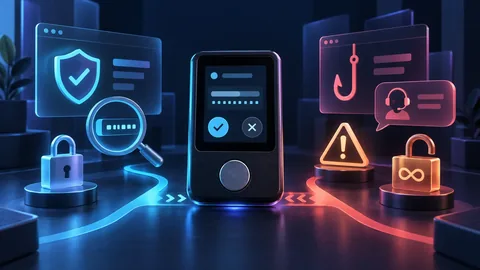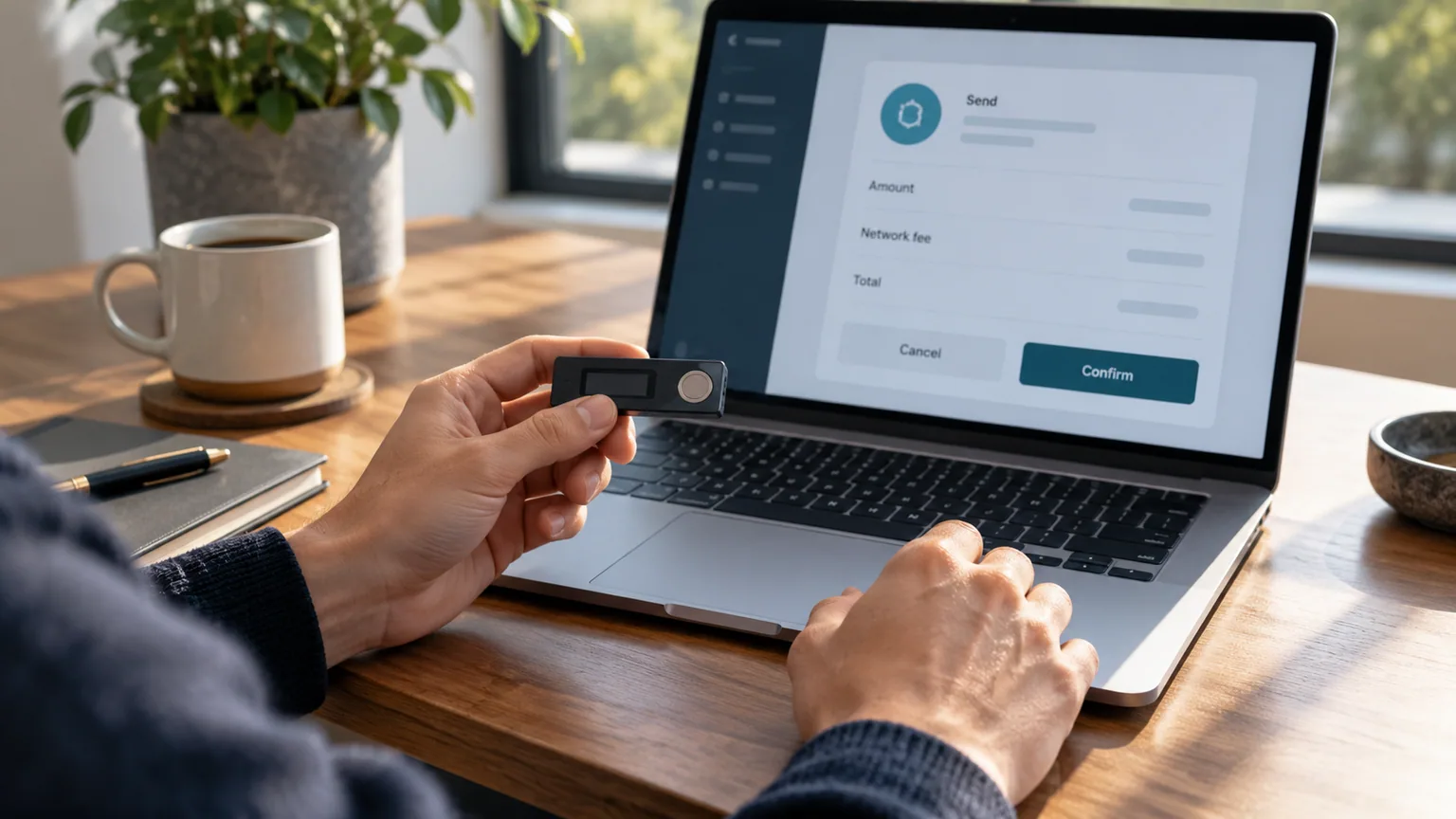
Buy through a verifiable channel, initialize the device yourself, keep the recovery phrase offline and make a small test transfer. Confirm address and details on the device screen.

Verify seller and setup

Offline and tested

Check on device screen
Choose and initialize
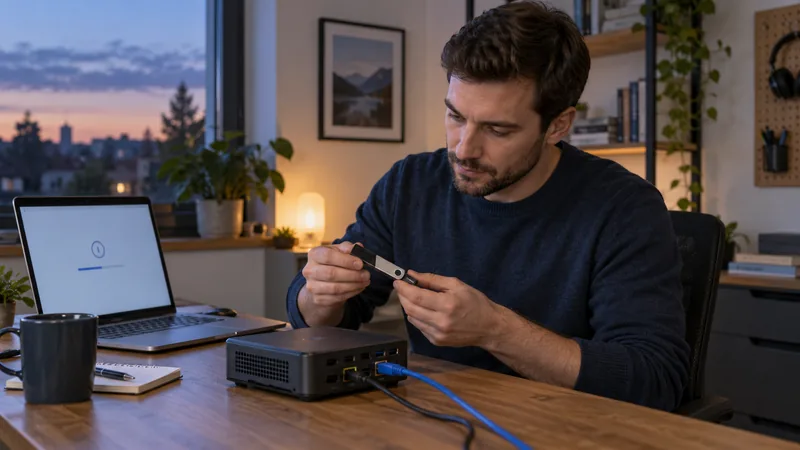
Verify the maker, seller and package integrity. Generate a fresh phrase on the device; a phrase supplied on paper in the box is a warning sign.
Back up and test
Record the phrase offline, protect it from physical damage and use separate storage locations. Test restoration using official instructions before holding a large amount.
Review every signature
Check network, recipient, amount and permissions on the hardware screen. A deceptive approval or substituted address can still drain funds.
Plan for loss
The recovery phrase or recovery mechanism restores access after device failure. Leave an understandable process for authorized people without exposing the secret.
Check the signature on the device
A hardware wallet reduces key exposure, but a compromised computer can propose a wrong address or excessive approval. The device screen is the decisive checkpoint.
- Buy through a trusted channel and initialize the phrase yourself.
- Test backup restoration without entering the phrase on a website.
Practical case: decision and limits
The computer shows the expected address but the device displays another destination. Reject the signature and inspect the request; the device provides an independent check of the computer proposal. When a device cannot interpret an operation and requires blind signing, isolated keys alone do not make it safe. Treat a supplied prewritten recovery phrase as known to someone else.
A concrete verification
Compare the device address with the trusted destination: the computer can display a different address.
An additional passphrase and a PIN serve different roles
In BIP-39, an optional passphrase participates in seed derivation. It is not the PIN protecting local device access. A different passphrase produces another valid seed, so a mistake does not necessarily trigger an error message.
- Not every recovery system follows BIP-39.
- Document the method used without exposing all secrets together.
Worked example: a restored wallet appears empty
A zero balance after recovery does not immediately prove funds are lost. A different passphrase, another account, a derivation path or the wrong network may explain an unexpected display.
- Follow the official procedure without entering secrets on a website.
- Compare a known address and avoid destructive resets until the discrepancy is understood.
Read the approval on the wallet’s own screen
A website may describe an action as “connect” while the device asks you to sign a spending approval. If the device shows a readable summary, check the action, asset, spender address and limit where those fields apply. If the screen displays raw data alone or warns that you are signing blind, stop until you can verify the parameters with a trusted tool.
Checks to make
| Item | Check |
|---|---|
| Device | Verify seller and setup |
| Backup | Offline and tested |
| Signature | Check on device screen |
Frequently asked questions
Does a hardware wallet stop every scam?
No. You can still confirm a harmful transaction.
Should I type the phrase into a website?
No. A site asking for it is suspicious.
Does a signing device alone back up a multisig wallet?
No. Keep required key backups and the policy describing quorum, public keys and useful paths. Test a spend with an absent signer. Identical or colocated devices can share failure or loss risks.
Verifiable sources
 Bitcoin.org: Securing your wallet
 Ethereum.org: Wallets
- Bitcoin Developer Guide: Wallets
- Bitcoin BIP 174: Partially signed transactions
- BIP 39: Mnemonic and passphrase derivation
- BIP-39: Mnemonic and optional passphrase
- ERC-7730 draft: Readable signing details
Independent educational content reviewed against primary documentation. No personalized recommendation or promise of returns. Updated November 15, 2026
Prepare and continue reading
Useful background
- How to choose a crypto wallet
A crypto wallet manages the keys that authorize operations; it does not physically hold the assets. The right choice depends on use, value at risk and your ability to protect a recovery phrase without sharing it.
- Message signatures: login, permits and permissions
No immediate paid transaction does not mean no risk. Inspect request type, domain, network, contract, spender, value and expiry. Reject requests whose scope your wallet cannot explain.

Continue to the next step
- Crypto backup and inheritance: preserve access without exposing keys
A sound plan separates inventory, secrets and instructions. It uses protected redundant copies, distinct people or roles, a tested recovery procedure and regular reviews. Never keep the recovery phrase, access code and complete instructions together.
- Multisig: quorum, backups and recovery
Multisig requires several keys to authorise spending. Security depends on the threshold, independent holders and policy backups as well as the private keys.